What happens to your sofa after collection
Once the van doors close, your sofa still has a route to follow. Here is where it goes, why upholstered seating is handled on its own, what gets recovered and how to check the carrier was entitled to take it.
Key points
- A sofa in good condition is passed on for reuse where possible before anything else is considered.
- Everything else goes to a licensed waste transfer station, where it is broken down and sorted.
- Upholstered seating is kept separate because it may contain POPs, and it is sent for incineration with energy recovery.
- Metal frames, springs and mechanisms and the timber in the frame can be recovered and recycled.
- A waste transfer note records the handover, and the carrier's licence can be checked on the public register.
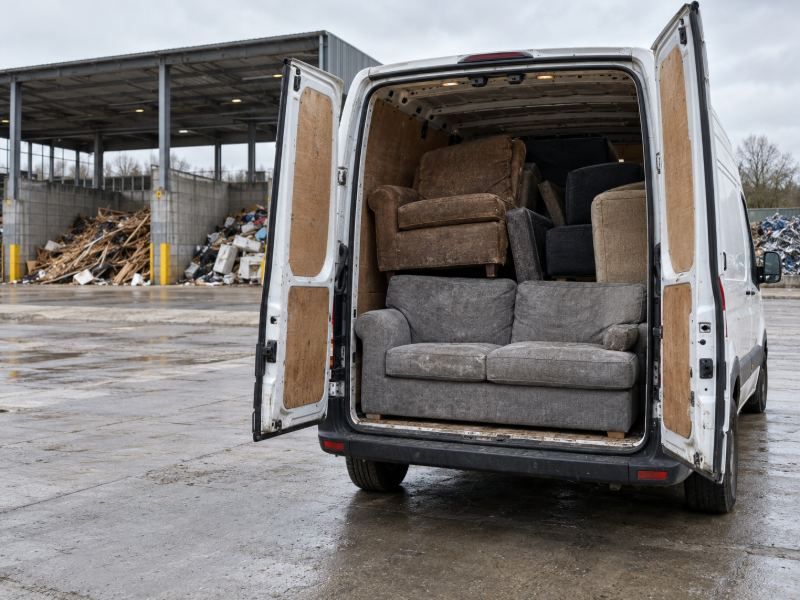
What happens to your sofa after collection: reuse comes first
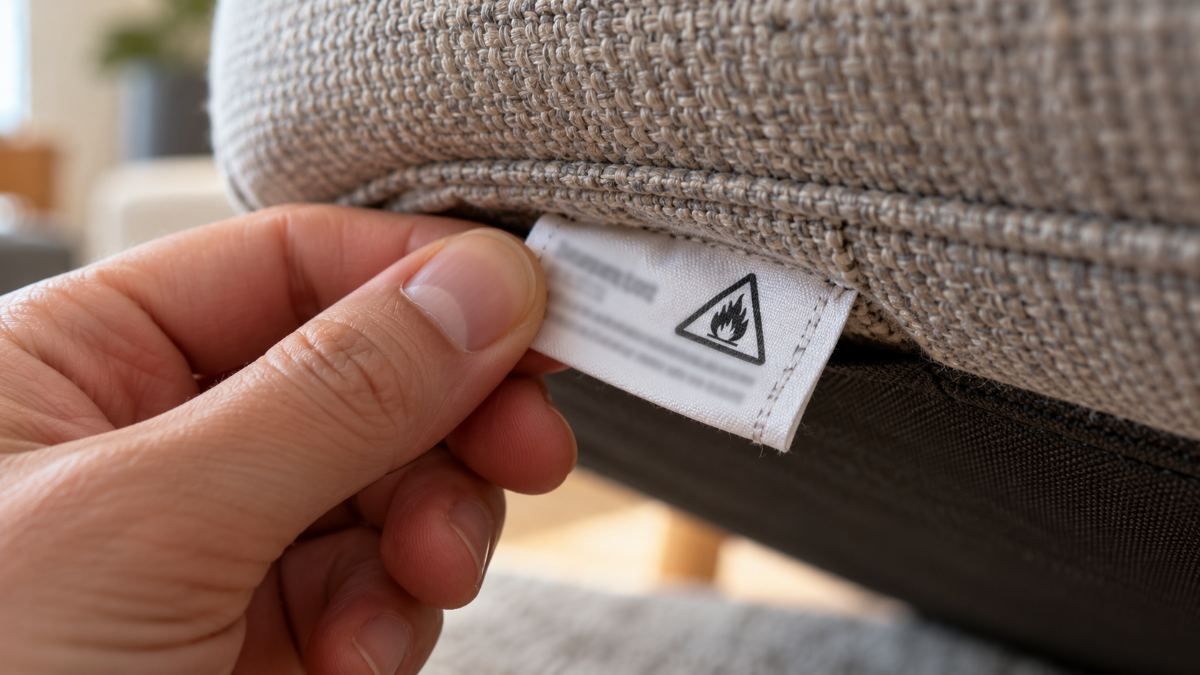
If you have ever wondered what happens to your sofa after collection, the answer starts before the van moves. Our crew looks at every sofa for reuse first. One that is clean, structurally sound and still carrying its permanent fire safety label can be passed on for reuse where possible, which keeps it in service and out of the waste stream altogether.
That is not most sofas. People usually get rid of a sofa because it is worn out, damaged or no longer wanted by anyone, and a sofa that has lost its fire label cannot be reused through the normal channels. For those, the next stop is a licensed waste transfer station. Either way, we can tell you where your sofa went if you ask.
Reuse is also why it helps to be honest in your photo. If the sofa is in good order, say so. If it has a broken frame or a missing label, say that too. It helps us decide the right route for it, and it helps the crew know what they are looking at when they arrive.
The licensed waste transfer station
A waste transfer station is a permitted site where collected waste is tipped, weighed, sorted and sent on to the right end destination. It is not a landfill and it is not a tip for the public. Carriers like us pay to use it, and in return the site takes responsibility for routing each type of waste properly and keeping records of what came in.
When a sofa arrives it is unloaded into the area set aside for upholstered seating, away from the general mixed waste. From there it is broken down. Loose cushions, covers and anything removable are separated, and the frame is stripped so the different materials can be dealt with on their own. The sofa that left your lounge in one piece ends up as several streams within a short time of arriving.
Collected, recorded and disposed of properly
Email a photo of your sofa for a fixed price. Once it is loaded you can ask for a waste transfer note, and we will tell you where it went.
Why upholstered seating is kept separate
Upholstered soft furnishings may contain persistent organic pollutants, usually called POPs. Because of that, sofas, armchairs and other upholstered seating must not be landfilled or broken up for recycling in the normal way. The foam and fabric that could carry those substances are sent for incineration with energy recovery at a permitted facility, where the material is destroyed and the heat is used to generate power.
This is the same reason councils and tips now ask residents to keep sofas separate from general waste, and why some skip companies restrict them. It applies to any carrier, licensed or not. The difference with a licensed carrier is that the sofa actually goes where it is supposed to, and there is paperwork to show it did.
For you, the practical effect is simple. The soft parts of your sofa do not go into a hole in the ground, and they are not shredded into mixed recycling where the pollutants could end up in something else. They are burned under controlled conditions and the energy is recovered.
The metal and timber that can be recovered
Strip the upholstery off a sofa and what is left is mostly metal and wood. Springs, the steel mechanism in a recliner or sofa bed, metal legs, bolts and brackets are all recoverable metal that goes to a scrap stream and is melted down for reuse. Hardwood and softwood frame timber, plywood and chipboard panels go to a timber stream.
This is how a sofa contributes to our overall figure of 90% of waste recycled. The foam and fabric are handled through energy recovery, and the hard frame materials are recycled in the conventional sense. A heavy metal-framed sofa bed or a large corner sofa with a timber carcass carries a lot of recoverable material once it is taken apart.
Waste transfer notes and what they record
A waste transfer note is the written record of waste changing hands. It describes what was collected, who it was collected from, who took it and where it was going. For a householder it is the simplest way to show that your sofa was handed to a licensed carrier rather than dumped, which matters because householders have a duty of care to make sure their waste is handled properly.
We provide a waste transfer note on request. If you are a landlord, a letting agent, a business or simply someone who likes a paper trail, ask when you book or afterwards by email and we will send it. Keep it with your records. If a sofa ever turns up somewhere it should not, the note shows who took responsibility for it and when.
How to check a carrier's licence before you book
Anyone who carries other people's waste for a living has to be registered with the Environment Agency as a waste carrier, and upper tier registration is the one that covers collecting waste from customers. Registrations are listed on a public register online. Search by the business name or the licence number and the entry shows whether the registration is current and which tier it holds.
Ask for the licence number before you hand over a sofa, and be wary of anyone who cannot or will not give it. In the UK, fly-tipping is a criminal offence, and a householder can be held responsible when waste they paid someone to remove is dumped. Our upper tier waste carrier licence is CBDU526130, and we would rather you checked it than took it on trust. If you want to compare every route for an old sofa, our guide on how to get rid of a sofa sets them out, and sofa disposal and collection explains how the job itself works.
Questions people ask
Will my sofa go to landfill?
No. Upholstered seating is kept separate from general waste because it may contain POPs and must not be landfilled. The foam and fabric go for incineration with energy recovery, and the metal and timber are recovered for recycling.
Can you tell me exactly where my sofa went?
Yes. We can tell you which licensed facility received it and provide a waste transfer note on request. Ask by email when you book or at any point afterwards.
How do I check your waste carrier licence?
Search the Environment Agency public register of waste carriers for Sofa Removal or for the number CBDU526130. The entry shows the registration and the tier. We are upper tier, which is the registration needed to collect waste from customers.
Does a reusable sofa cost less to collect?
Email a photo and we will send one fixed price for collecting it, whatever its condition. If the sofa turns out to be reusable we pass it on where possible, which is a better outcome for the sofa rather than a different price for you.
Ready to get rid of it?
Fill in the form, attach a photo of the sofa to the email it opens, and we reply with a fixed price for collecting it from inside your home.
- Licensed waste carrier
- Fixed price from a photo
- Two-person crew and van
- Same or next day where possible
Get a fixed price from a photo
Fill this in and we open an email with your details ready. Attach a photo of the sofa and send.
Nearly there. Tap the button to open an email to us with your details filled in, attach a photo of the sofa and send it. You will get a fixed price back.
No email app on this device? Send the photo to hello@sofa-removal.co.uk with your postcode.