Why charities refuse sofas without fire labels
You offer a sofa to a charity, they ask about the label, and the collection falls through. Here is what the permanent fire label is, where it hides, and what to do when it is gone.
Key points
- Upholstered seating is treated to meet fire safety rules, and a permanent label stitched to the sofa is the proof.
- The label is usually under a seat cushion, on the underside of the seat or on the base, not on the outside.
- Reuse charities resell what they collect, so they will usually only accept a sofa that still carries the label.
- If the label is missing or cut off, the sofa can still be sold privately, taken to the tip or collected by a licensed carrier.
- Removing a label does not change the sofa, but it does close the charity route for good.
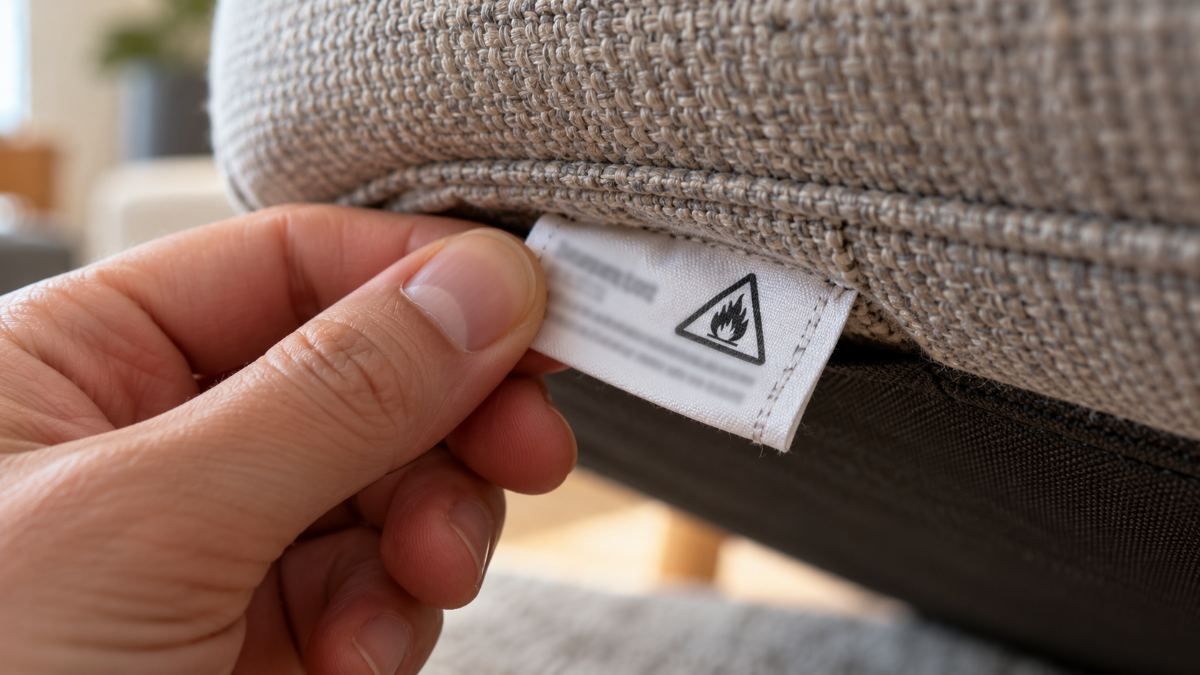
What fire labels are and what they show
Fire labels are the small stitched-in tags that show a piece of upholstered furniture has been treated to meet fire safety rules. Every sofa, armchair, sofa bed, footstool and pouffe sold new as domestic furniture is covered by those rules, and the label is the maker's way of saying so. It is permanent on purpose. The idea is that the item can be identified as compliant long after the receipt and the shop have been forgotten.
When a sofa is sold new it usually carries two labels. One is a swing tag hung on the sofa in the showroom, which comes off once it is delivered. The other is the permanent label, a fabric or printed tag sewn into a seam or fixed to the frame. It is the permanent one that matters for reuse, because it is the only one that stays with the sofa.
The permanent label states that the furniture meets fire resistance requirements and normally names the manufacturer or importer and a batch or date reference. It does not expire. A sofa made decades ago with its label intact is still, as far as the label goes, compliant furniture.
Where to find the label on your sofa
The label is rarely somewhere you would see it in everyday use. Start by lifting the seat cushions. Many makers stitch the label to the platform underneath, often along the front edge or near one of the arms. On a sofa with fixed cushions, run your hand along the seam where the seat meets the back.
If there is nothing there, tip the sofa onto its back and look at the underside. The label is often sewn to the dust cover, the thin black fabric stapled across the bottom of the frame, or attached to a wooden rail near one of the legs. On an armchair the same spots apply, and on a sofa bed it may be tucked inside the folding mechanism.
Check every loose cushion as well. Some manufacturers label the seat and back cushions individually, and a charity may want to see those too. Take a photo of whatever you find before you contact anyone, because the first thing they will ask is whether the label is there and what it says.
Charity said no? Send us the photo instead
Whether the label is there or not, email a picture of the sofa and we will quote one fixed price to carry it out and dispose of it properly.
Why charities need the label before they will take a sofa
Furniture charities do not keep sofas. They collect them, check them, and sell them in their shops or pass them to people who need furniture. That makes them a supplier of second-hand upholstered furniture, and they can only supply what they can show meets the fire safety rules. The permanent label is how they show it.
Without the label a charity has no way to tell a compliant sofa from one that is not, and it cannot take your word for it. So the policy at most charities is simple. No permanent label, no collection, however good the sofa looks. Their collection crews check at the door, and a sofa that fails the check stays where it is.
It can feel pedantic when the sofa is clearly a known brand in good order. But the charity is carrying the responsibility for every item it sells, and a blanket rule is the only practical way to manage that across thousands of donations.
What to do if the label is missing or cut off
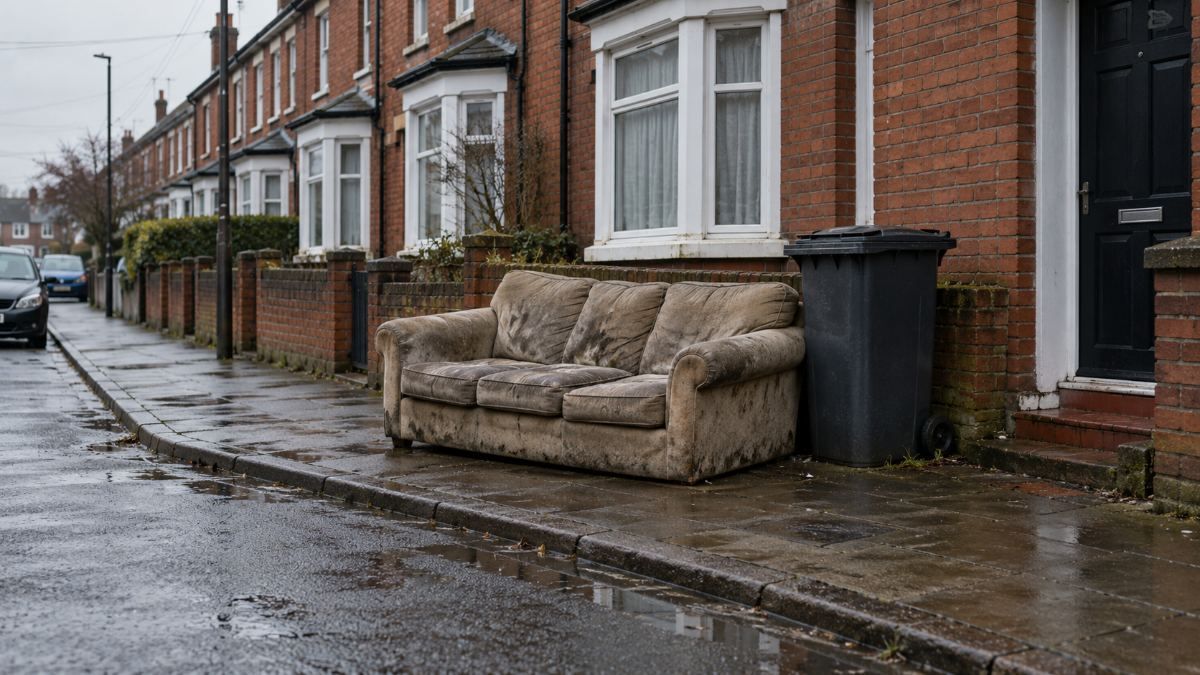
Labels go missing for ordinary reasons. They get cut off because they scratch the backs of legs, they fall off with a worn dust cover, or they were removed by a previous owner who did not know what they were for. Whatever the reason, the result is the same. The charity route is closed, and you need another way to move the sofa on.
If the sofa is still sound, you can sell it or give it away privately. A private buyer or a free-listing taker is choosing the sofa for themselves and can decide what they are comfortable with. Be honest in the listing that the label is missing so nobody has a wasted trip.
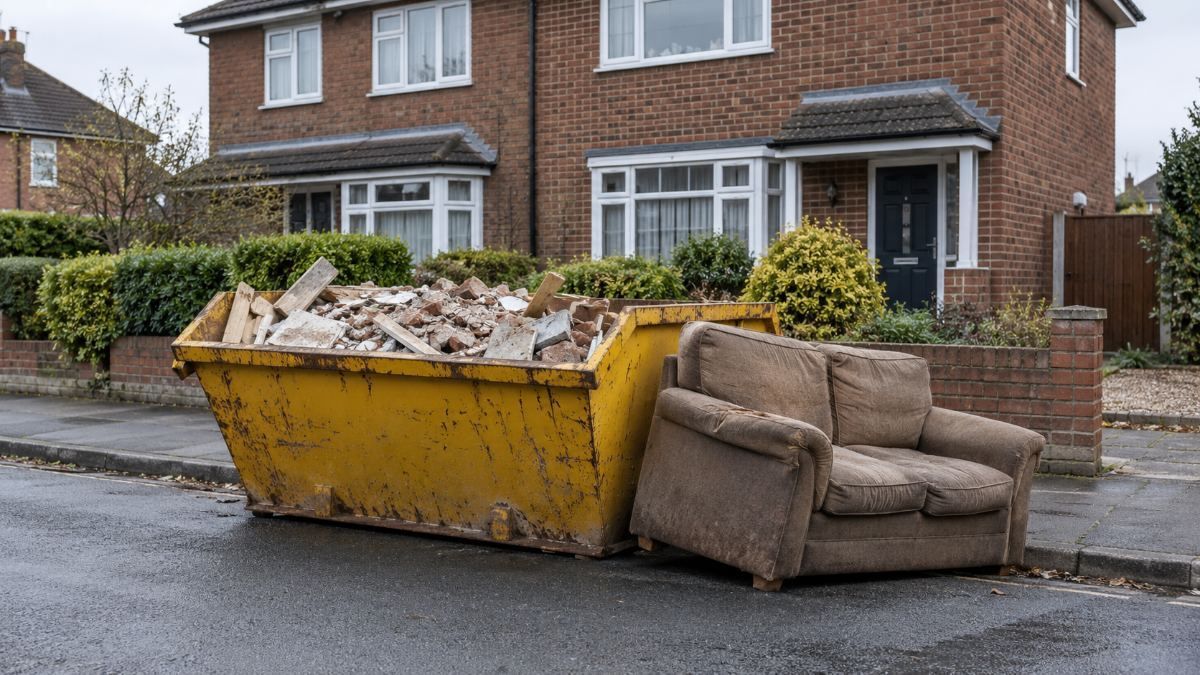
If nobody wants it, or you need it gone quickly, the label makes no difference to disposal. The tip will take it, a council bulky waste collection will take it, and so will we. Email a photo and we will reply with a fixed price for carrying it out and disposing of it, label or no label.
Other reasons a charity may still say no
The label is the first hurdle but not the only one. Charities sell what they collect, so the sofa has to be clean and saleable. Stains, tears, cigarette burns, pet damage, strong smells and sagging seats will all lead to a refusal even with a perfect label. Most crews also decline anything with a cracked frame or broken springs.
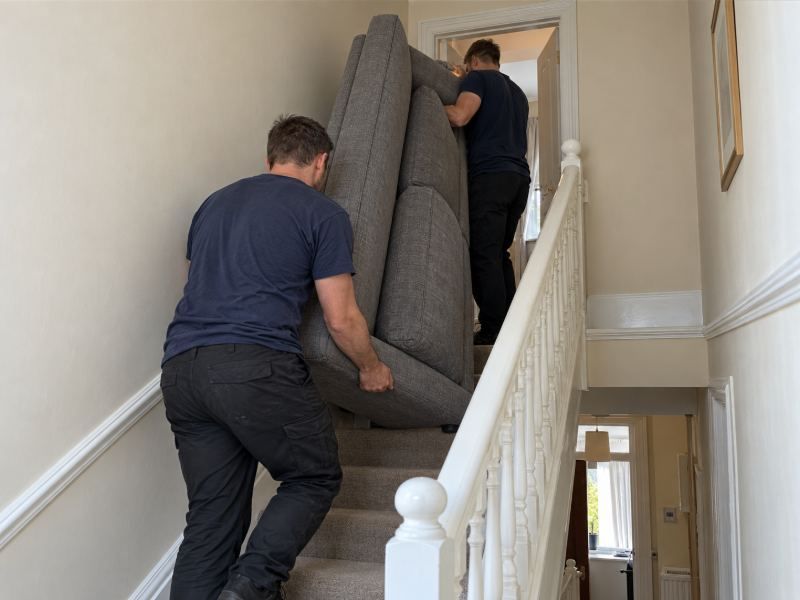
Access can be a problem too. Charity crews have limited time per stop and may not carry a sofa down several flights or dismantle it to get it out. If yours is in an upstairs flat, ask about that when you book rather than finding out on the day. If the charity cannot take it, our two-person crew will carry a sofa out from anywhere in the property, including a heavy recliner or a large corner sofa.
What happens to a labelled sofa we collect
We look at every sofa for reuse before anything else. A clean sofa with its label intact is passed on for reuse where possible, which is the same outcome the charity would have given it. One that cannot be reused goes to a licensed waste transfer station, where the metal, timber, foam and fabric are sorted. You can read more in what happens to your sofa after collection.
Either way you get the paperwork. We hold upper tier waste carrier licence CBDU526130, we can tell you where your sofa went, and we will provide a waste transfer note if you want one for your records. For a sofa the charity turned away, that is the closest thing to a clear conscience the situation allows.
Questions people ask
Can I buy a replacement fire label for my sofa?
No. The label is applied by the manufacturer and records that the sofa was made to meet the fire safety rules. A label bought separately proves nothing about your sofa, and a charity will not accept one.
Does the swing tag count as a fire label?
Not for reuse. The swing tag is the display label removed when the sofa is sold. Charities look for the permanent label stitched into the sofa, so keep that one even if you throw the swing tag away.
Will you collect a sofa that has no fire label?
Yes. The label only affects reuse. If your sofa has no label we still collect it, carry it out and take it to a licensed waste transfer station. Email a photo and we will send a fixed price.
Do armchairs and footstools need fire labels too?
Yes. The same fire safety rules cover armchairs, footstools, pouffes and sofa beds, and charities apply the same check to all of them. Look under the seat or on the base for the permanent label.
Ready to get rid of it?
Fill in the form, attach a photo of the sofa to the email it opens, and we reply with a fixed price for collecting it from inside your home.
- Licensed waste carrier
- Fixed price from a photo
- Two-person crew and van
- Same or next day where possible
Get a fixed price from a photo
Fill this in and we open an email with your details ready. Attach a photo of the sofa and send.
Nearly there. Tap the button to open an email to us with your details filled in, attach a photo of the sofa and send it. You will get a fixed price back.
No email app on this device? Send the photo to hello@sofa-removal.co.uk with your postcode.